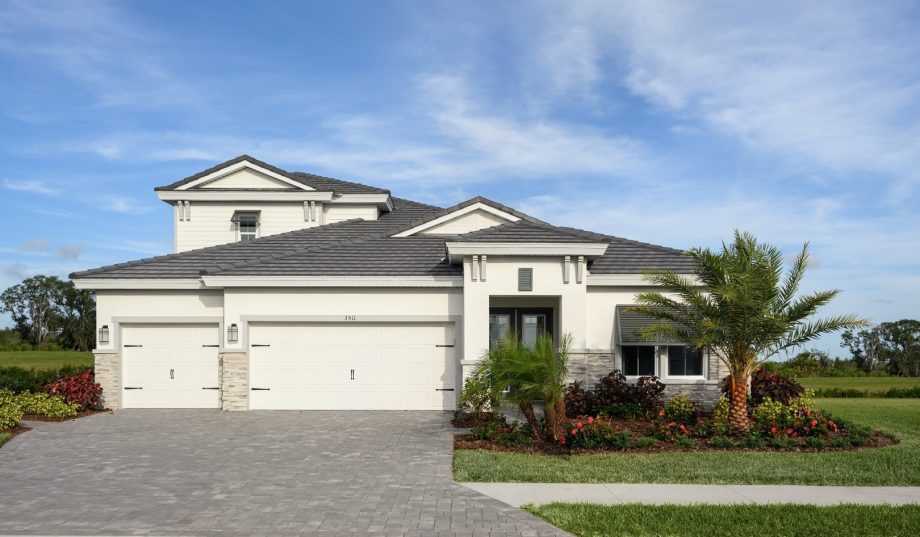
Why this question is everywhere right now
Search this question and you will find a genre, not a thread. On Reddit's r/firsttimehomebuyer and state subreddits, "D.R. Horton horror stories" recur at the top of the feed; one Central Florida poster quoted in a Medium investigation of Florida new-build defects called the builder "the Taco Bell of home construction." That is discussion, not data — but in August 2026 the story moved from forums to the Wall Street Journal, which reported that D.R. Horton's legal reserves rose to $1.1 billion amid construction-defect claims, and that the Seminole Tribe of Florida is suing Lennar over 550+ homes alleging mold and roof defects.
Both things can be true at once: these are the two largest homebuilders in America, building at a scale where even a small defect rate produces a large absolute number of unhappy buyers and a large reserve — and individual buyers have documented real, serious problems. What neither the forums nor the headlines can tell you is the only thing that matters at a closing table: whether the specific home, in the specific community, built by the specific local crew, is sound. That is a verifiable question. The rest of this guide is about verifying it.
"In more than 25 years across real estate and mortgage lending, I learned the advertised price is never the real number. The real number is the payment — with taxes, insurance, HOA and CDD stacked on top. That's the only way I price a home for my buyers."
— Oday Marogi, Selling Sunset Collection
Quality has a real number too, and it is not the builder's logo. It is the inspection reports on your home, at the stages when defects are still visible and still the builder's to fix. Everything below builds to that plan.
What the volume-builder model actually trades off
D.R. Horton and Lennar did not become America's largest builders by building custom homes slowly. The model is repetition: a limited set of floor plans, built many times, by subcontractor crews moving home to home on a tight schedule, with materials bought at national scale. That model is genuinely good at some things and structurally weaker at others — and knowing which is which tells you where to watch.
| What the model gives you | What it trades away |
|---|---|
| Price per square foot. Repetition and national purchasing power are how these builders post the lowest starting prices in their markets — locally, Lennar posts the lowest entry at both Lakewood Ranch and Wellen Park on our builder pages. | Customization and finish level. Fewer structural options, standardized finishes, and design choices from a set menu — especially in entry series. |
| Speed. A practiced plan built by crews who have built it before moves fast, and finished quick-move-in inventory is almost always available. | Crew consistency. Your home is built by whichever local subcontractors are on that phase, that week. The brand is national; the workmanship is local and variable. |
| Scale warranties and systems. Published warranty programs, service departments, and — as the WSJ figures show — very large reserves set aside for claims. | Attention per home. A superintendent running many homes at once cannot watch yours the way a custom builder with three builds can. Nobody's job in the model is "check this whole house for the buyer." That job has to be yours — or your inspector's. |
The builders themselves tier this trade-off. On Selling Sunset Collection's D.R. Horton builder page, the local lineup runs from Express and Tradition series homes — the value end, with current listings from the $260s in some communities — up through Freedom 55+ and Emerald series homes approaching 3,975 square feet. On our Lennar builder page, the pitch is Everything's Included® — features other builders charge for, bundled into the price — across collections from terrace condominiums from $234,990 at Wellen Park Golf & Country Club to estate homes. An entry-series home and a top-series home from the same logo are different products. Price the tier you are actually buying, and inspect it like the tier it is.
What the data points do — and don't — prove
The $1.1 billion reserve (D.R. Horton). As the Wall Street Journal reported in August 2026, D.R. Horton's legal reserves rose to $1.1 billion. A legal reserve is money a company sets aside for expected claims costs. It proves defect claims against the company are large and growing — a buyer should not wave that away. It does not prove that any particular home is defective, and a reserve is an accounting estimate, not a court finding about your floor plan.
The Seminole Tribe suit (Lennar). Per the same WSJ reporting, the Seminole Tribe of Florida is suing Lennar over 550+ homes, alleging mold and roof defects. A lawsuit is an allegation the plaintiff must prove; Lennar disputes such claims. It proves a sophisticated buyer with 550+ homes believes it found systemic problems — worth taking seriously, and exactly the kind of moisture-and-roof risk Florida buyers should have inspected. It does not prove the outcome, and it does not grade a Lennar home in Lakewood Ranch.
The review-site scores. Consumer review platforms show both builders with low average ratings and recurring complaints about workmanship and warranty follow-through. Treat these as a signal about where the friction lives — warranty service and punch-list completion come up again and again — not as a defect rate. Unhappy buyers post; the denominator is hundreds of thousands of homes.
The honest summary: the documented record says defect risk with the volume builders is real enough that the largest one reserves eleven figures against it. The documented record does not say your home will be one of the bad ones. That gap is precisely what inspections close.
Quality is community-by-community, not brand-by-brand
The clearest local illustration is Star Farms at Lakewood Ranch. On Selling Sunset Collection's Star Farms community page, D.R. Horton is the volume builder in a master plan of about 2,800 homes on 1,300 acres: roughly 20 floor plans from 1,463 to 3,975 square feet across its Express, Tradition, Freedom 55+ and Emerald series, with current listings spanning roughly $305K–$742K, and its Saddlestone neighborhood running from a $307,000 townhome to single-family homes at $419,000–$603,990. In the same community, Homes by WestBay builds at $630s–$3.0M and Perry Homes starts in the $790s. Nobody sensible calls that one market with one quality level — it is four different products, at four different price points, sharing a fence line.
That is the right lens for both builders everywhere in Sarasota and Manatee. Lennar's local range runs from a $234,990 terrace condominium at Wellen Park Golf & Country Club to its Calusa Country Club village in Lakewood Ranch, where it posts the lowest entry point of any Lakewood Ranch village, from $296,499. The crew, the superintendent, the series and the price tier of your village predict your experience far better than the national headline does. Which is good news: all four of those are things you can check before and during the build.
The protection plan: your own inspections at 4 stages
This is the point of this guide. Whatever you conclude about either brand, this plan costs the same and works the same — and it converts "trust the builder" into "verify the home." Redfin's published guide puts phase inspections at about $100–$500 per phase, or roughly $800–$2,000 for a full package (national figures, checked November 23, 2026 — not a quote for a specific home).
| Stage | When | What it catches |
|---|---|---|
| 1. Pre-pour | After forms, steel and under-slab plumbing are in — before the concrete arrives | Footing depth and placement, reinforcement layout, vapor barrier, plumbing stub-out locations |
| 2. Pre-drywall | After framing and plumbing, electrical and HVAC rough-ins — before insulation and drywall | Framing and connectors, wiring and plumbing rough-ins, ductwork, roof structure, window installation and flashing — the moisture paths behind most mold claims |
| 3. Final | Home complete, before closing and your walkthrough | Every finished system operated: HVAC, plumbing, electrical, appliances, roof, grading and drainage, doors, windows, finishes |
| 4. 11-month warranty | Around month 11, before first-year coverage expires | Settling cracks, nail pops, sticking doors, drainage problems, and system issues a year of living revealed — documented while the builder is still responsible |
Two logistics rules make or break the plan. First, the pre-pour and pre-drywall windows can be measured in days, so the inspector is hired and the builder notified before construction starts — confirm your right to bring an inspector, in writing, in the contract stage, not after the slab is poured. Second, if you are buying a finished quick-move-in home, stages 1 and 2 have already passed: the practical plan is a full final inspection before closing plus the 11-month warranty inspection. Either way, the county's inspections and the builder's own quality checks are not substitutes — neither one was performed on your behalf.
The warranty floor: HB 623, and getting it in writing
Florida law now sets a floor under every new-home warranty. For homes closed on or after July 1, 2025, HB 623 (section 553.837, Florida Statutes) requires the builder to warrant the home for 1 year against construction defects in equipment, material or workmanship that result in a material violation of the Florida Building Code, and to remedy covered defects at the builder's expense. That is the statutory floor — it applies whether or not the sales center mentions it.
On top of that floor, most big builders publish their own written warranty, commonly structured 1-2-10: roughly one year on workmanship, two years on systems, ten years on structure. Do not buy the structure from a brochure summary — the exclusions, the claim procedure, the response timelines and what counts as a defect live in the builder's actual warranty document, and the two builders' documents are not identical. Get the full warranty in writing before you sign, read the claim process while nothing is wrong, and calendar your month-11 inspection the day you close. This section is general information about how these warranties generally work — it is not legal advice, and your own contract and warranty documents control your home. For a dispute about a specific defect, talk to a Florida attorney.
Before you sign with either builder: the checklist
- Register your agent first. Your agent must be registered with you on your first visit to the sales center, or you can lose your own representation. Call before you tour — in most new-construction sales the builder pays your agent's commission.
- Price the series, not the logo. An Express-series home and an Emerald-series home are different products. Compare within the tier you are buying.
- Get inspection access in writing. All four stages, your inspector, your timing — agreed before the build starts.
- Get the warranty in writing. The full document, not the flyer — coverage, exclusions, claim procedure.
- Know the statutory clock. HB 623's one-year coverage runs from the earlier of title conveyance or first occupancy. Write your start date down.
- Document everything during the build. Photos at each stage, every punch-list item in writing, every promise from the sales center in writing.
D.R. Horton and Lennar quality questions, answered
Are D.R. Horton homes poor quality?
Not categorically. D.R. Horton is America's largest homebuilder and builds to a price point: its local series run from entry-level Express homes to the higher Emerald series, and quality varies by community, crew and series. Online discussion includes a recurring 'horror story' genre, and the Wall Street Journal reported in August 2026 that the company's legal reserves rose to $1.1 billion — a real data point, but a reserve is money set aside for claims, not an admission about any individual home. The practical answer is to judge the specific community and protect the specific home with your own inspections at four stages.
Are Lennar homes poor quality?
The same framework applies. Lennar is one of the two largest builders in America, competes on value — locally it posts some of the lowest starting prices in Lakewood Ranch and Wellen Park — and bundles features through its Everything's Included program. The Wall Street Journal's August 2026 reporting included the Seminole Tribe of Florida's suit against Lennar over 550+ homes alleging mold and roof defects; Lennar disputes such claims, and a lawsuit is an allegation, not a verdict. What you can control is verification: independent inspections during the build and the warranty terms in writing before you sign.
What did the Wall Street Journal report about D.R. Horton and Lennar in 2026?
As documented in Selling Sunset Collection's research, the Wall Street Journal reported in August 2026 that D.R. Horton's legal reserves rose to $1.1 billion amid construction-defect claims, and that the Seminole Tribe of Florida is suing Lennar over 550+ homes with alleged mold and roof defects. Reserves and lawsuits show defect claims are a real cost of building at national scale — they do not tell you whether the specific home you are buying is well built. That is what staged inspections are for.
If the county and the builder already inspect a new home, why hire my own inspector?
Because neither of those inspections works for you. County inspections check code compliance at a moment in time, and the builder's quality checks are the builder checking its own work. Your own licensed inspector checks the whole house on your behalf, at the four stages when problems are still visible: pre-pour, pre-drywall, final, and an 11-month warranty inspection before first-year coverage expires. Redfin's published guide puts phase inspections at about $100-$500 per phase, or roughly $800-$2,000 for a full package.
What warranty does a new Florida home come with?
By law, homes closed on or after July 1, 2025 carry the HB 623 statutory warranty (section 553.837, Florida Statutes): the builder warrants the home for 1 year against construction defects in equipment, material or workmanship that result in a material violation of the Florida Building Code. Most big builders add their own written warranty on top — commonly structured 1-2-10 (one year workmanship, two years systems, ten years structural) — but the exact terms are the builder's document, not the sales pitch. Get the full warranty in writing before you sign, and read what it excludes. This is general information, not legal advice; your contract and warranty documents control your home.
Can I bring my own agent and inspector to a D.R. Horton or Lennar home?
Generally yes — and both steps have a timing catch. Your agent must be registered with you on your first visit to the sales center, or you can lose the right to your own representation; in most new-construction sales the builder pays your agent's commission. Inspection access during construction is set by the builder's policy and your contract, so confirm it in writing before you sign, while you still have leverage. Call 941-948-4284 before your first model visit and I will walk you through both.
Considering a Horton or Lennar home? Verify it before you sign
Register before your first visit: both builders — like most builders — require your agent to be registered with you on your first visit to the sales center. Walk in alone first and you can lose the right to your own representation. Call or text 941-948-4284 first; in most new-construction sales the builder pays your agent's commission. I will walk you through the series tiers in the community you are considering, the four-stage inspection plan, and the warranty questions to get answered in writing.
Ask about a D.R. Horton or Lennar home you're considering
Tell me which builder and community you're looking at. I will send the inspection-stage plan for that build, the warranty questions to ask before you sign, and register you before any model home visit.
Finding this useful? If you like what I'm posting, please leave a review so I can continue giving you guys this vital information. It takes less than a minute: Review Selling Sunset Collection on Google.