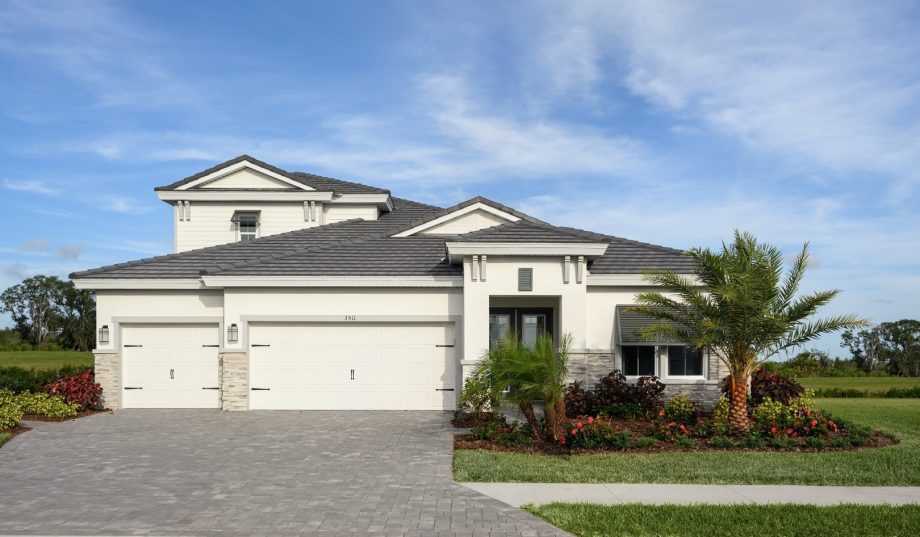
Why a brand-new home still needs its own inspection
"New" describes the materials, not the workmanship. A production home in Sarasota or Manatee County is assembled by a rotating cast of subcontractors — framers, plumbers, electricians, roofers, HVAC crews — working to the builder's schedule, often on several homes at once. The crew that frames on Tuesday may never see what the electrician does on Thursday, and most of what an inspector finds on a new build lives in exactly those handoffs: a drain line sloped the wrong way, a duct crushed during installation, flashing missed at a roof penetration, an outlet run left unconnected. None of that requires a bad builder. It requires only a fast build and no one whose job is to check the whole house on your behalf.
Timing is what makes new construction different from a resale inspection. On a resale home, one inspection before closing sees everything there is to see. On a new build, the most important systems are visible only briefly: the foundation's steel is visible for a day or two before the pour, and the framing, wiring, plumbing and ducts are visible for a short window before insulation and drywall seal them away for the life of the house. Miss the window and the only way to check that work later is to open a wall. That is why new-construction inspections are staged — matched to construction milestones, not to calendar dates — and why the plan has to be in place before the build starts moving.
"In more than 25 years across real estate and mortgage lending, I learned the advertised price is never the real number. The real number is the payment — with taxes, insurance, HOA and CDD stacked on top. That's the only way I price a home for my buyers."
— Oday Marogi, Selling Sunset Collection
Inspections belong in that same real-number math. A defect the builder fixes during construction costs you nothing but a phone call. The same defect found two years after closing is your repair bill, your contractor search and your weekend. The four stages below are how you keep defects on the builder's side of that line.
The 4 inspection stages at a glance
| Stage | When it happens | What it catches |
|---|---|---|
| 1. Pre-pour (foundation) | After the forms, steel and under-slab plumbing are in — before the concrete truck arrives | Footing depth and placement, rebar or post-tension cable layout, vapor barrier, plumbing stub-out locations, soil preparation |
| 2. Pre-drywall | After framing and the plumbing, electrical and HVAC rough-ins — before insulation and drywall | Framing and structural connectors, wiring and plumbing rough-ins, ductwork, roof structure, window installation and flashing |
| 3. Final | When the home is complete, before closing and your blue-tape walkthrough | Every finished system operated: HVAC, plumbing, electrical, appliances, roof, grading and drainage, doors, windows and finishes |
| 4. 11-month warranty | Around month 11 after closing, before first-year warranty coverage expires | Settling cracks, nail pops, sticking doors, drainage and grading problems, system issues a year of living revealed |
If you are buying a home that is already built — a quick-move-in or spec home — the first two windows have passed, and the practical plan is a full final inspection before closing plus the 11-month warranty inspection. If you are building from the slab up, all four stages are available to you, but only if you arrange them in advance: the pre-pour and pre-drywall windows can be measured in days, and they do not wait for anyone's schedule.
Stage 1: Pre-pour — the foundation inspection
The pre-pour inspection happens at the one moment the foundation is still readable: forms set, footings dug, steel reinforcement or post-tension cables laid, the vapor barrier down, and the under-slab plumbing stubbed out — everything the concrete is about to bury permanently. Your inspector verifies that the footings are the depth and width the plans call for, that the reinforcement is placed and tied correctly, that the vapor barrier is intact, and that drain and water lines sit where the floor plan says they should.
What it catches is the category of problem you least want to discover later: a plumbing stub-out poured in the wrong place means jackhammering a finished slab to move it; a compromised vapor barrier can mean moisture problems under flooring for years; reinforcement errors are structural, full stop. In Florida's sandy soils and high water table, the under-slab work matters more here than in most of the country. The catch for buyers is logistics: builders pour on their schedule, not yours, so your inspector needs the pour date as early as the builder can give it — one more reason the inspection plan belongs in the contract conversation, not in a scramble the week of the pour.
Stage 2: Pre-drywall — the most valuable hour of the build
Ask inspectors which stage they would keep if a buyer could only afford one mid-build visit, and most will name this one. The pre-drywall inspection happens after the house is framed and the trades have run their rough-ins — plumbing supply and drain lines, electrical wiring and boxes, HVAC ducts, the roof structure overhead — but before insulation and drywall hide all of it. For a short window, the entire skeleton and nervous system of the house is open to view.
This is where an inspector catches the handoff errors: framing that is out of plumb or missing structural connectors and hurricane straps — a detail that matters in Florida's wind codes — drain lines without proper slope, ducts that are kinked, disconnected or crushed, wiring run where it will be damaged, plumbing vents that don't terminate correctly, windows installed without proper flashing. Every one of those is a straightforward fix for the builder while the walls are open, and an expensive, destructive repair once they are closed. If your budget forces a choice among the mid-build stages, this is the stage to protect — and the stage whose short window makes advance scheduling essential.
Stage 3: The final inspection — before you close
The final inspection is the full, top-to-bottom inspection of the completed home, done before closing — the same scope an inspector would give a resale home, run on a house nobody has lived in. Every system gets operated, not just looked at: the HVAC runs, every faucet and drain is tested, outlets and fixtures are checked, appliances are run, the roof and attic are inspected, and the exterior grading and drainage are evaluated to confirm water moves away from the house — a first-order concern in Florida rain.
Do not confuse this with your blue-tape walkthrough. The walkthrough is your cosmetic pass with the builder's representative — paint, finishes, and the punch list you can see. The final inspection is a technical pass by someone trained and equipped to test systems, get into the attic, and check the roof, and it produces a written report. Sequence matters: schedule the inspection far enough ahead of closing that the report is in your hands and the builder has a fair window to address findings before you sign and fund. Findings at this stage are normal — a new home with a short list is a well-built home, and the list is exactly what the inspection is for.
Stage 4: The 11-month warranty inspection
The stage buyers most often skip is the one that costs them warranty claims. Around month 11 after closing — before the builder's first-year warranty coverage expires — your inspector walks the home again with a year of living behind it. Houses settle, materials shrink and expand through a full cycle of Florida seasons, and the first year is when hairline drywall cracks, nail pops, doors that no longer latch, grading that ponds water against the house, and marginal HVAC or plumbing work announce themselves.
The point of the timing is documentation while the builder is still responsible. A written inspector's report at month 11 turns "we noticed some cracks" into a dated, itemized warranty claim filed inside the coverage window. Published Florida guides note that state law (HB 623, effective July 1, 2025) provides a one-year builder warranty on new homes, and many builders additionally offer longer coverage on systems and structure — the exact terms live in your own contract and warranty documents, so confirm them in writing at closing and calendar the 11-month date the day you move in. This page explains how the warranty inspection generally works; it is not legal advice, and your contract governs your claim.
Why the builder's inspections and the county's don't replace yours
Every buyer asks some version of this, and it deserves a direct answer, because both of those inspections are real — they are just not yours.
The county's inspections are code-compliance checks at set milestones during the build. The county inspector's question is narrow: does this work meet the minimum building code? Code is a floor, not a standard of workmanship. A county pass does not grade how well anything was done, does not check that the options and upgrades you paid for are the ones installed, does not test the finished systems the way a buyer's inspection does, and does not produce a report for you. A home can pass every county inspection and still hand its owner a long list of legitimate defects.
The builder's own inspections — superintendent walks and internal quality checks — serve the builder's purposes: keeping the schedule, managing subcontractors, and limiting the builder's warranty exposure. They are not adversarial to you, but they are not accountable to you either, and you generally never see their findings. The builder's sales representative, helpful as they may be, works for the builder. The pattern is the same one that runs through every part of a new-construction purchase: everyone at the sales center is doing their job, and their job is the builder's side of the table. Your inspector is the one participant in the entire build whose only job is your side.
How to get inspection rights into your builder contract
Here is the part buyers learn too late: the right to bring your own inspector onto the site is not automatic. Inspection access rules vary by builder — builders set their own policies on which stages third-party inspectors may attend, how much notice they require, and what credentials or insurance the inspector must carry. Some builders are welcoming and organized about it; others restrict access in ways that effectively limit you to a final inspection. Because the policies differ, the only reliable move is to settle the question before you sign the contract, when you still have leverage:
- Ask the access question directly: "At which stages may my own licensed inspector inspect the home, and what notice or requirements apply?" Ask it of every builder you are comparing — the answer is part of comparing builders.
- Get the answer in writing: ideally as a term in the contract itself, or at minimum as a written addendum or written confirmation from the builder. A verbal yes at the sales center is not a right you can enforce at the pre-drywall window.
- Line up your inspector early: inspectors who do phase work book against construction milestones; having yours engaged before the slab is poured is what makes the short windows hittable.
- Read your contract's own language: builder contracts are the builder's documents. Read the inspection, warranty and dispute sections carefully, and have your own attorney review anything unclear — this guide explains how it generally works and is not legal advice.
Start your builder comparison on our builder pages, which track each builder's local communities, pricing and current incentives: D.R. Horton, Lennar and Pulte Homes. Wherever you build, bring the inspection question to the first contract conversation — not the last one.
Before your first visit to any builder's sales center, register your agent. Builders generally require your agent to be registered with you at your first visit or first contact — walk into a model alone and you may lose the right to your own representation, in a purchase where the builder's rep works for the builder. In most new-construction sales the builder pays your agent's commission, so the protection costs you nothing out of pocket. Call or text Oday at 941-948-4284 before you go.
What the four stages cost — and how the timing works
Phase inspections are priced per visit, and most inspectors discount the full program when you book it up front. Redfin's published guide to phase inspections puts the typical cost at about $100–$500 per phase, or around $800–$2,000 for a full three- or four-phase package — national guidance that varies with the size of the home, the inspector's experience and the market, not a quote for any specific Sarasota or Manatee home. Against the price of the home — and against the cost of a single post-closing repair that a stage inspection would have handed to the builder — the full four-stage program is a rounding error, and it is one of the few purchase costs that can only ever pay you back.
Timing is the real discipline. The stages are tied to construction milestones, and milestones move: weather, permitting and trade schedules shift pour and drywall dates, sometimes on a few days' notice. The working system is simple — your inspector is engaged from the start, you or your agent confirm each milestone date with the builder's superintendent as it firms up, and each visit is booked the moment its window opens. This is also where having your own agent on a new-construction purchase earns its keep: tracking the builder's schedule, the inspection windows and the contract deadlines is the job, and it is a job the builder's representative does not do for you.
Your Sarasota & Manatee new-construction agent: Oday Marogi
Oday Marogi, Selling Sunset Collection — Keller Williams On The Water Sarasota. Oday Marogi is a Sarasota-area REALTOR® with more than 25 years of experience across real estate and mortgage lending. He started Selling Sunset Collection in 2016, and he runs new-construction purchases the way a lender runs a file: every claim verified, every deadline calendared, every number checked against the real one. On a new build that means the inspection stages are planned at contract, not remembered at closing — and the builder's answers about access, warranty and schedule are in writing before his buyers sign.
New construction inspection questions, answered
Do I need a home inspection for new construction?
Yes. A brand-new home is built by dozens of subcontractors working to a schedule, and nobody in that chain works for you. Your own licensed inspector checks the home at four stages — pre-pour (foundation), pre-drywall, final, and an 11-month warranty inspection — and gives you a written report the builder can act on while fixes are still the builder's responsibility. The builder's own quality checks and the county's code inspections serve different purposes and do not replace an inspector who answers only to you.
What are the four stages of a new construction inspection?
The four stages are: (1) pre-pour, before the foundation concrete is poured, checking forms, footing depth, steel or post-tension cables, the vapor barrier and plumbing stub-outs; (2) pre-drywall, after framing and the plumbing, electrical and duct rough-ins are in but before insulation and drywall cover them; (3) the final inspection, a full inspection of the completed home before closing, with every system operated; and (4) the 11-month warranty inspection, done around month 11 after closing so anything the first year of living revealed can be documented and claimed before the builder's first-year warranty coverage expires.
The builder and the county already inspect the home — isn't that enough?
No, because neither inspection works for you. County inspectors check that work meets minimum building code at set milestones — they do not grade workmanship, check that options you paid for were installed, or produce a report for you. The builder's own quality checks serve the builder's schedule and warranty exposure, and the builder's sales representative works for the builder. An independent inspector you hire is the only inspector in the process whose only job is your interest, and the only one who hands you the report.
How much does a new construction inspection cost?
It varies with the size of the home, the inspector and how many stages you book. Redfin's published guide to phase inspections puts the typical range at about $100–$500 per phase, or around $800–$2,000 for a full three- or four-phase package booked together. That is general national guidance, not a quote for a specific Sarasota or Manatee home — get the inspector's own price for your home's size and the stages you want before you contract. Figures checked November 23, 2026.
Can a builder refuse to let my own inspector into the home?
Inspection access rules vary by builder — some welcome independent inspectors at set stages, others set conditions on scheduling, notice or the inspector's credentials, and the right is not automatic if your contract does not provide for it. That is why the time to settle it is before you sign: ask how the builder handles third-party inspections at each stage, and get the answer into your contract or in writing. Read your own contract's inspection language carefully, and have your own attorney review it if anything is unclear — this page explains how it generally works and is not legal advice.
When should I schedule the 11-month warranty inspection?
Around month 11 after closing — late enough that a full year of living in the home has revealed settling cracks, sticking doors, drainage problems and system issues, but still inside the builder's first-year warranty window so the findings can be claimed while the builder is responsible for them. Published Florida guides also note that state law (HB 623, effective July 1, 2025) provides a one-year builder warranty on new homes, alongside the longer structural coverage many builders offer — confirm the exact warranty terms in your own contract and warranty documents, in writing, at closing.
Building new? Get the inspection plan in place before you sign
Call or text 941-948-4284 or email odaym@kw.com — Oday will walk you through the four stages for the builder and community you're considering, the contract questions to ask about inspection access, and the registration step that protects your representation before your first model visit.
Ask about inspections for a home you're building
Tell me which builder and community you're considering. I will send the inspection-stage plan for that build, the contract questions to ask before you sign, and register you before any model home visit.
Finding this useful? If you like what I'm posting, please leave a review so I can continue giving you guys this vital information. It takes less than a minute: Review Selling Sunset Collection on Google.